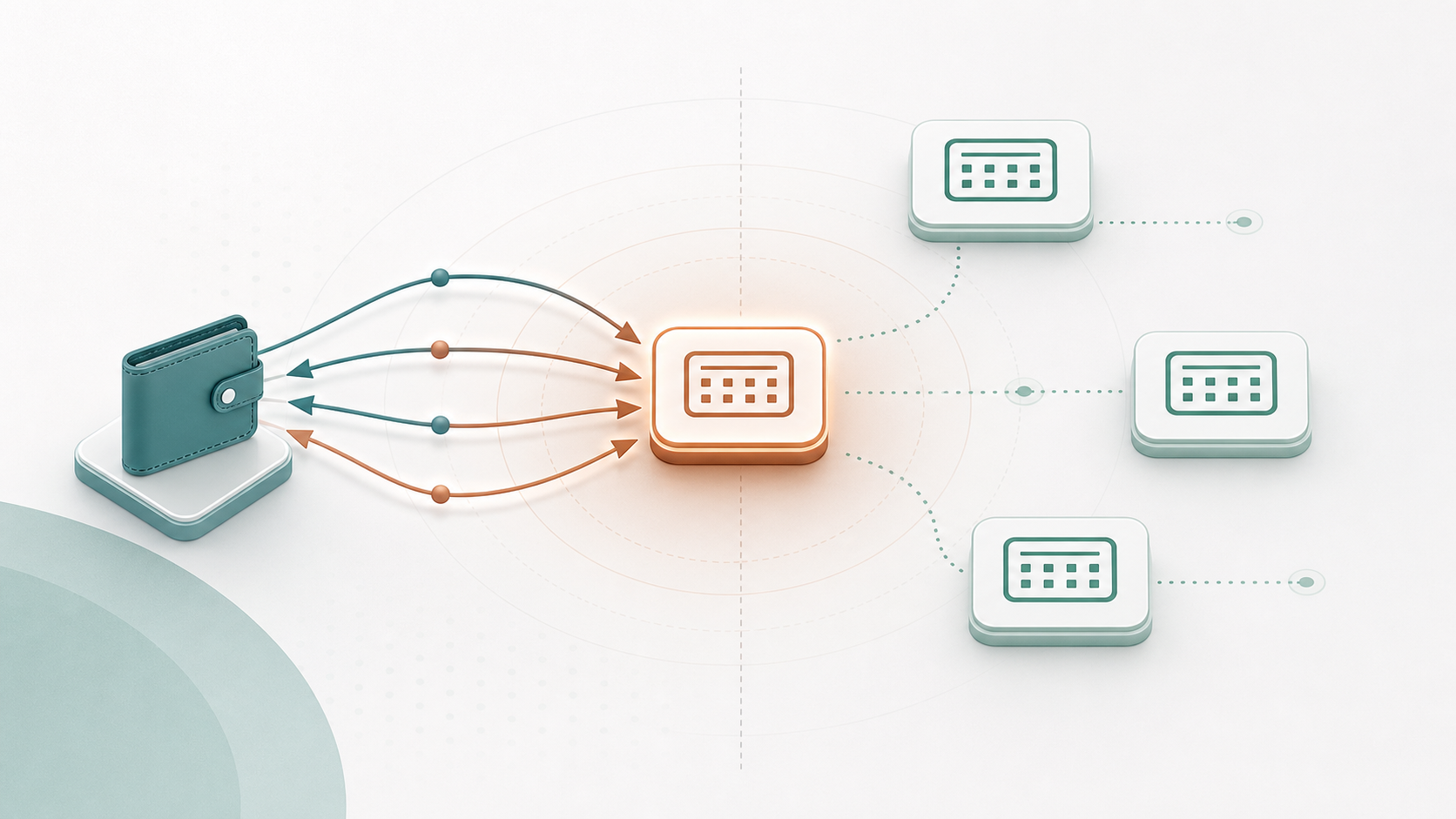
Anonymous means your activity is not tied to an identifiable person or identity. Pseudonymous means your activity is tied to an identifier, such as a wallet address, even if that identifier is not your legal name.
Most everyday public-chain crypto use is pseudonymous, not truly anonymous.
The Short Version
A public wallet address can act like a visible payment nickname. It may not say your real name by itself, but it can build a public history. If that wallet address becomes linked to you, the activity attached to it becomes easier to understand in context.
That is why "crypto is anonymous" is usually the wrong beginner assumption.
What Anonymous Means
Anonymous means the person behind an action is not known or practically identifiable from available context. In crypto conversations, people often use the word loosely, but it is a strong claim.
If a system or wallet says something is anonymous, the natural next question is: anonymous from whom, under what conditions, and with what remaining metadata?
What Pseudonymous Means
Pseudonymous means activity is connected to a name-like identifier. In crypto, that identifier is often a public address.
The address may look random. It may not contain your name. But if the address receives funds, sends funds, holds tokens, interacts with apps, or gets posted publicly, it can become a persistent public trail.
This is similar to using the same online handle everywhere. The handle may not be your legal name, but over time it can build enough context to become recognizable.
Why Public Wallet Addresses Matter
Ethereum accounts are represented by public addresses. Ethereum block explorers can show account and transaction activity. Bitcoin privacy guidance also warns that public transaction history and address reuse can weaken privacy.
So the privacy issue is not only whether your name appears directly onchain. The issue is whether your activity becomes linkable.
Example: Sending Crypto To A Friend
Imagine you send a friend one payment from your main wallet. You only meant to send that payment.
But if your friend looks up the address on a block explorer, they may see more than that payment: balances, token movements, old transactions, dapp interactions, NFTs, or repeated counterparties depending on the chain and wallet.
Your friend may not know your legal name from the address alone. But they now have a public identifier connected to you.
That is pseudonymity.
Common Misconceptions
"No bank account means anonymous"
Not necessarily. Removing a bank from the transaction does not remove public-chain visibility.
"A new wallet fixes everything"
A new wallet can help reduce future linkability, but it does not erase links already made through transfers, exchange withdrawals, public posts, or repeated behavior.
"A swap makes activity private"
A regular DEX swap is usually still visible as an onchain interaction. Privacy-focused tools may reduce certain links, but they need to be evaluated by their actual design.
"If my name is not onchain, nobody can connect it"
The name may come from offchain context: exchange accounts, social posts, invoices, dapp accounts, wallet connections, screenshots, or people you transact with.
FAQ
Is Bitcoin anonymous or pseudonymous?
Bitcoin is better described as pseudonymous for everyday users. Bitcoin.org warns that transactions are public and that privacy depends heavily on user behavior, including address reuse.
Is Ethereum anonymous?
Ethereum accounts use public addresses, and explorer data can show account and transaction activity. That makes everyday Ethereum use pseudonymous rather than anonymous.
Can a wallet address reveal my real name?
Not by itself in most cases. But it can become linked to your real identity through exchanges, invoices, public posts, dapps, or people who know you.
Why do people say crypto is transparent?
Public blockchains are designed so activity can be verified. That transparency is useful for the network, but it creates privacy tradeoffs for users.
Summary
Anonymous means not tied to an identifiable person. Pseudonymous means tied to an identifier that may not be your real name. Most public-chain crypto sits in the second category. A wallet address may start as a random-looking string, but it can become a public profile if you reuse it or connect it to your life.
Sources
- Bitcoin.org: Protect Your Privacy: https://bitcoin.org/en/protect-your-privacy
- Ethereum.org: Ethereum Accounts: https://ethereum.org/developers/docs/accounts/
- Ethereum.org: Block Explorers: https://ethereum.org/developers/docs/data-and-analytics/block-explorers/
- Bitcoin Optech: Output Linking: https://bitcoinops.org/en/topics/output-linking/
Editor Note
Reviewed 2026-06-09 by Sofia. Structure and source discipline were already sound; review focused on preserving the beginner-friendly distinction without adding unsupported claims. No new verification TODOs added.