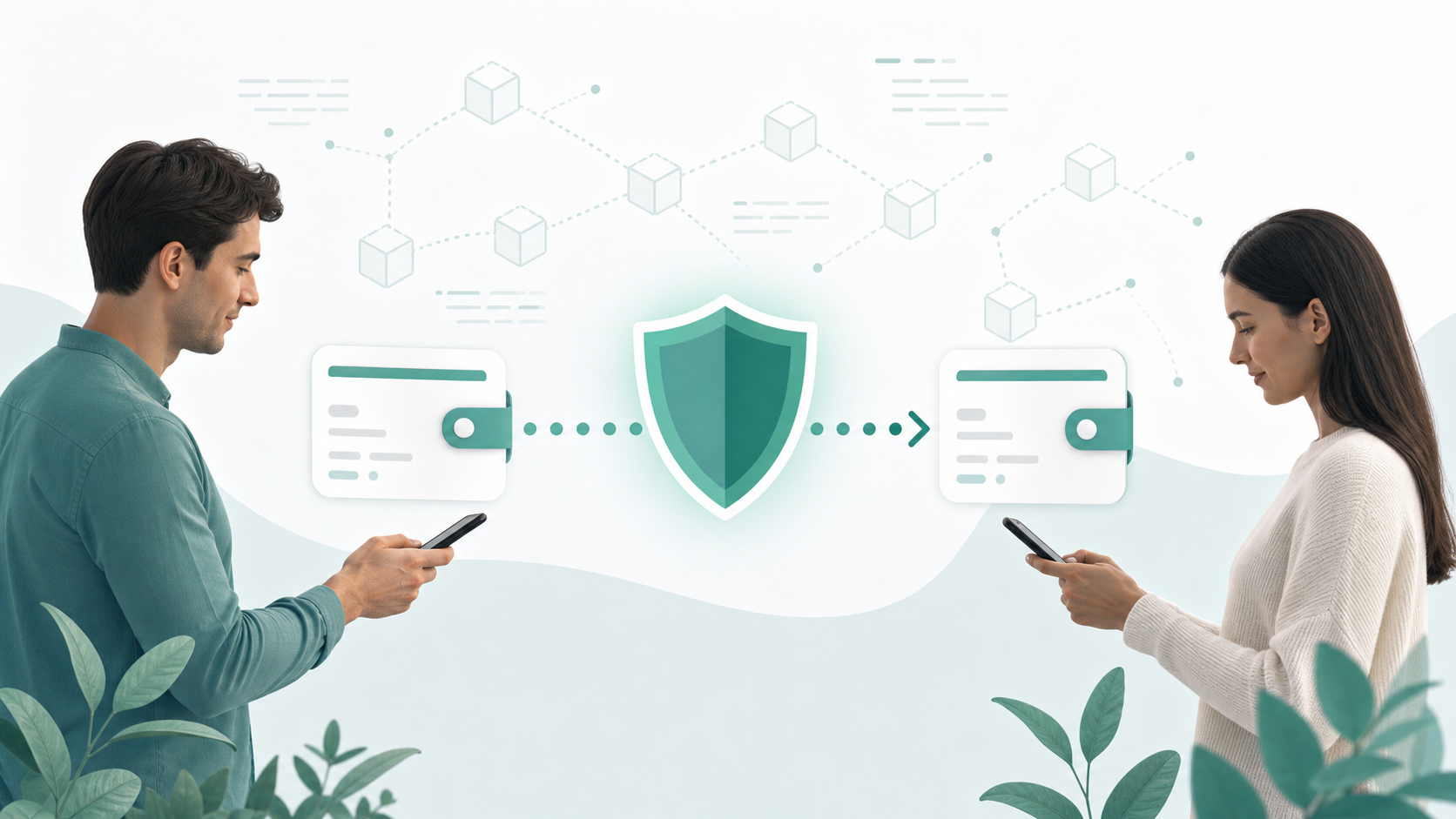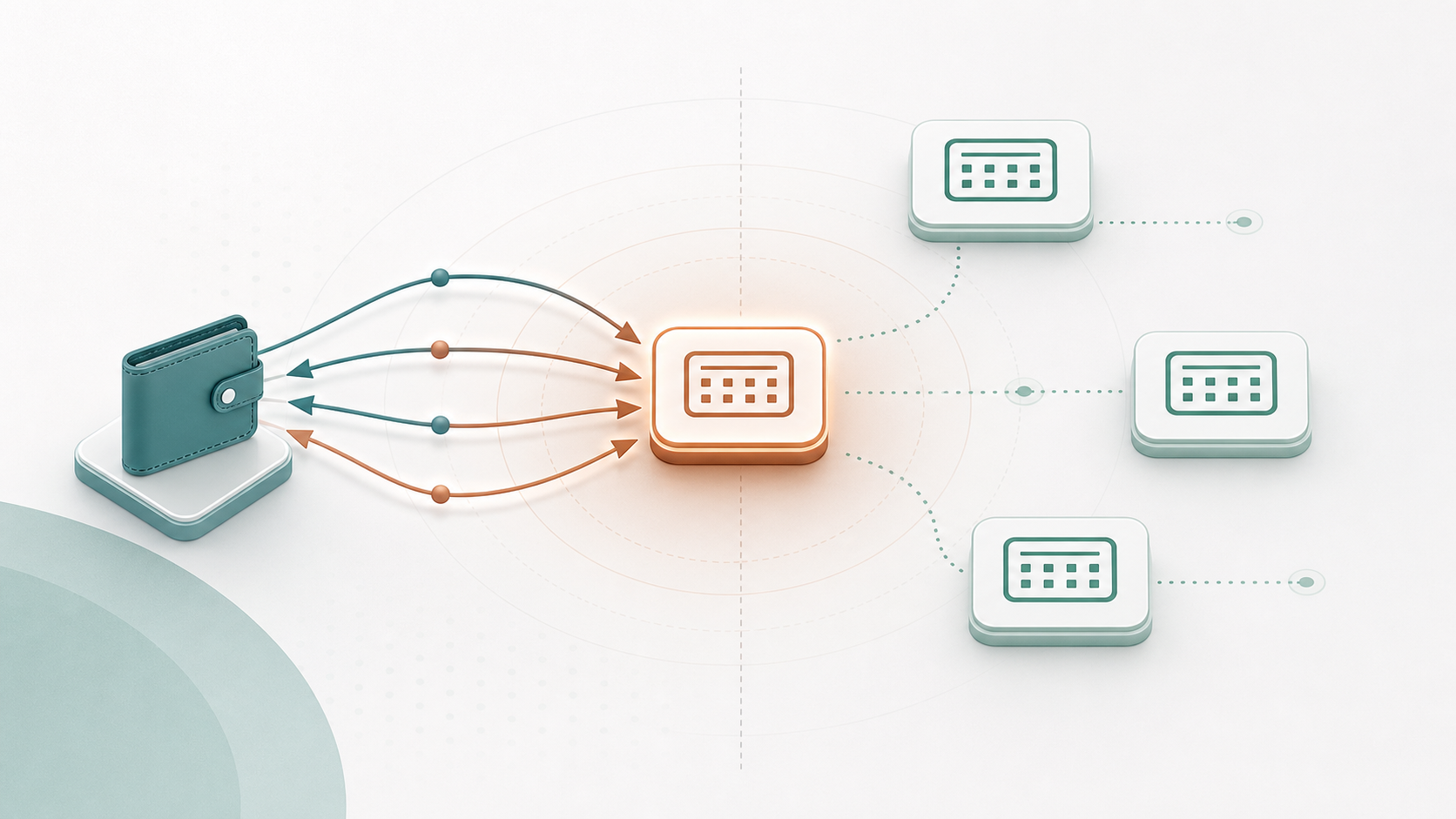
Address reuse means using the same crypto address for more than one payment, deposit, donation, invoice, app, or public profile. It is a simple habit, but on public blockchains it can make separate activity easier to connect.
The short answer: reusing an address can turn many separate transactions into one visible public history. It does not reveal your private key, and it does not automatically reveal your legal identity, but it can make your wallet activity easier for other people, apps, counterparties, and analytics tools to inspect or link.
What Address Reuse Means
A crypto address is a public identifier used to receive funds or interact with a blockchain. When someone asks where to send funds, you usually give them an address. When you use that same address again and again, that is address reuse.
Address reuse can happen casually. You might paste the same address into a freelance invoice, a donation page, an exchange withdrawal, a friend-to-friend payment, and a DeFi app. Each use may feel separate to you, but the public record may show them around the same address.
This is not only a Bitcoin issue. Bitcoin-style wallets often encourage fresh receiving addresses. Ethereum and other account-based chains commonly make one account address central to many actions. The details differ by chain and wallet, but the privacy question is similar: what does this address let someone connect?
Why Reuse Hurts Privacy
Public blockchains are designed to be inspectable. That is useful for verification, but it also means a public address can become a public activity page.
If you reuse one address, someone who learns that address may be able to inspect more than the one transaction they were involved in. They may see other incoming payments, outgoing payments, timing patterns, balances, token activity, or app interactions, depending on the chain and block explorer.
The biggest privacy problem is linking. One payment to a friend is one piece of information. The same address on a public website, an invoice, a social profile, and an exchange deposit trail can become a stronger clue that those activities belong together.
A Simple Example
Imagine you use one address for four things:
- A friend sends you money.
- A client pays an invoice.
- You publish the address for public donations.
- You later use the same wallet with a crypto app.
Each person only needed one address for one reason. But if they look it up, they may be looking at the same public history. Your friend does not need to see your client payments. Your client does not need to see your donation address. A public donation page does not need to reveal your broader wallet activity.
That is the practical privacy cost of address reuse: it can collapse separate contexts into one public trail.
Bitcoin-Style Wallets And Fresh Receiving Addresses
Bitcoin.org's privacy guidance says Bitcoin transactions are public, traceable, and stored in the Bitcoin network. It also warns that once Bitcoin addresses are used, they become connected to the history of transactions involving them.
That is why Bitcoin.org recommends using a new Bitcoin address each time you receive a new payment. In practice, the useful habit is to follow the fresh receiving-address flow your wallet provides instead of making one long-term address serve every payment context.
Fresh receiving addresses are limited. They do not erase transaction history, and they do not prevent every kind of analysis. But when your wallet supports that flow, they help avoid making every incoming payment point to the same public address.
Ethereum And Account-Based Wallets
Ethereum works differently from Bitcoin. Ethereum.org describes an account as an entity with an ETH balance that can send messages on Ethereum. An externally owned account is controlled by private keys and can receive, hold, and send ETH and tokens.
In practice, many Ethereum users treat one account address as their main wallet identity. MetaMask, for example, makes an account's public address easy to copy, and its help docs explain that EVM-compatible networks can share the same Ethereum-style address format.
That means "use a fresh receiving address for every payment" does not map perfectly to every Ethereum or EVM wallet workflow. Users may need separate accounts or wallets for separate purposes, and some apps may create public links between activity anyway. The safer general principle is to avoid using one long-term address for every context.
Fresh Addresses Have Limits
Fresh addresses reduce obvious reuse, but they do not guarantee privacy.
Addresses can still become linked through later activity. If funds from several addresses are combined, moved together, sent through the same account, or tied to the same public profile, someone may infer that they are related. On smart contract chains, token transfers, approvals, app interactions, bridges, NFT activity, and cross-network address use can add more linking signals.
Fresh addresses also do not hide your activity from a service you use. An exchange, payment processor, wallet app, or counterparty may still have records outside the blockchain. Address hygiene is useful, but it is not a substitute for legal, tax, security, or compliance obligations.
Basic Address Hygiene
For normal users, address privacy is mostly about not oversharing by default.
- Do not publish your main wallet address unless you want that address to be public.
- For Bitcoin-style wallets, use the wallet's fresh receiving address flow when receiving new payments.
- Keep separate purposes separate where your wallet and chain make that practical.
- Think before reusing an address for friends, clients, public profiles, donations, and apps.
- Double-check copied addresses before sending funds, especially after pasting.
- Do not assume a new address makes activity anonymous.
The goal is not paranoia. The goal is context control. A person paying one invoice should not automatically get a map of your broader wallet life.
Common Misconceptions
"A public address is safe to share, so reuse does not matter."
A public address does not reveal your private key, so it is safe in that narrow sense. But it can still reveal public activity associated with that address. Safe to receive funds is not the same as private.
"New addresses guarantee anonymity."
No. Fresh addresses can reduce obvious linking, but they do not guarantee anonymity. Blockchain data, app behavior, counterparties, exchanges, and later fund movements can still create links.
"Address reuse only matters for Bitcoin."
No. The exact mechanics differ, but the broader issue exists anywhere a public address accumulates visible activity. On account-based chains, the risk often shows up as one account becoming a long-term public profile.
"If someone sees my address, they can steal my funds."
No. A public address does not reveal your private key or seed phrase. The bigger privacy issue is what someone can learn from public activity connected to that address.
FAQ
What is address reuse in crypto?
Address reuse is using the same public crypto address for multiple transactions or purposes. It can make separate activity easier to view and connect.
Why do Bitcoin wallets show new receive addresses?
Bitcoin.org recommends fresh receiving addresses because public Bitcoin transaction history is traceable. Fresh addresses help avoid pointing every payment at the same visible address.
Should I use a new address for every crypto payment?
It depends on the chain and wallet. For Bitcoin-style receiving flows, fresh addresses are common privacy hygiene. For Ethereum-style account wallets, users often separate activity with different accounts or wallets instead. In both cases, avoid making one address do every job.
Can someone see my balance if I reuse an address?
On many transparent chains, a public address can be inspected through block explorers. What someone can see depends on the chain, token, wallet, and explorer, but address reuse can make balances and history easier to associate with you.
Is address reuse illegal?
No. Address reuse is usually a privacy and operational hygiene issue, not a legal category. This article is not legal advice.
Summary
Address reuse is one of the easiest crypto privacy mistakes to understand. If you use the same address everywhere, you may turn separate payments, apps, and public profiles into one easier-to-read history.
Fresh addresses and separate accounts can help reduce obvious linking, but they do not guarantee anonymity. The practical habit is simple: keep different contexts separate where you can, understand what your wallet exposes, and never assume public-chain activity is private by default.
Sources
- Bitcoin.org: Protect Your Privacy: https://bitcoin.org/en/protect-your-privacy
- Ethereum.org: Ethereum Accounts: https://ethereum.org/developers/docs/accounts/
- MetaMask Help Center: How to copy your address and view account details: https://support.metamask.io/configure/accounts/how-to-view-your-account-details-and-public-address
- MetaMask Help Center: Understanding the Ethereum address format and why it matters: https://support.metamask.io/more-web3/learn/the-ethereum-address-format-and-why-it-matters-when-using-metamask/
Editor Note
Reviewed 2026-06-09 by Sofia. Preserved the Bitcoin/Ethereum distinction, kept fresh-address claims cautious, and left no unsupported product claims. No new verification TODOs added.