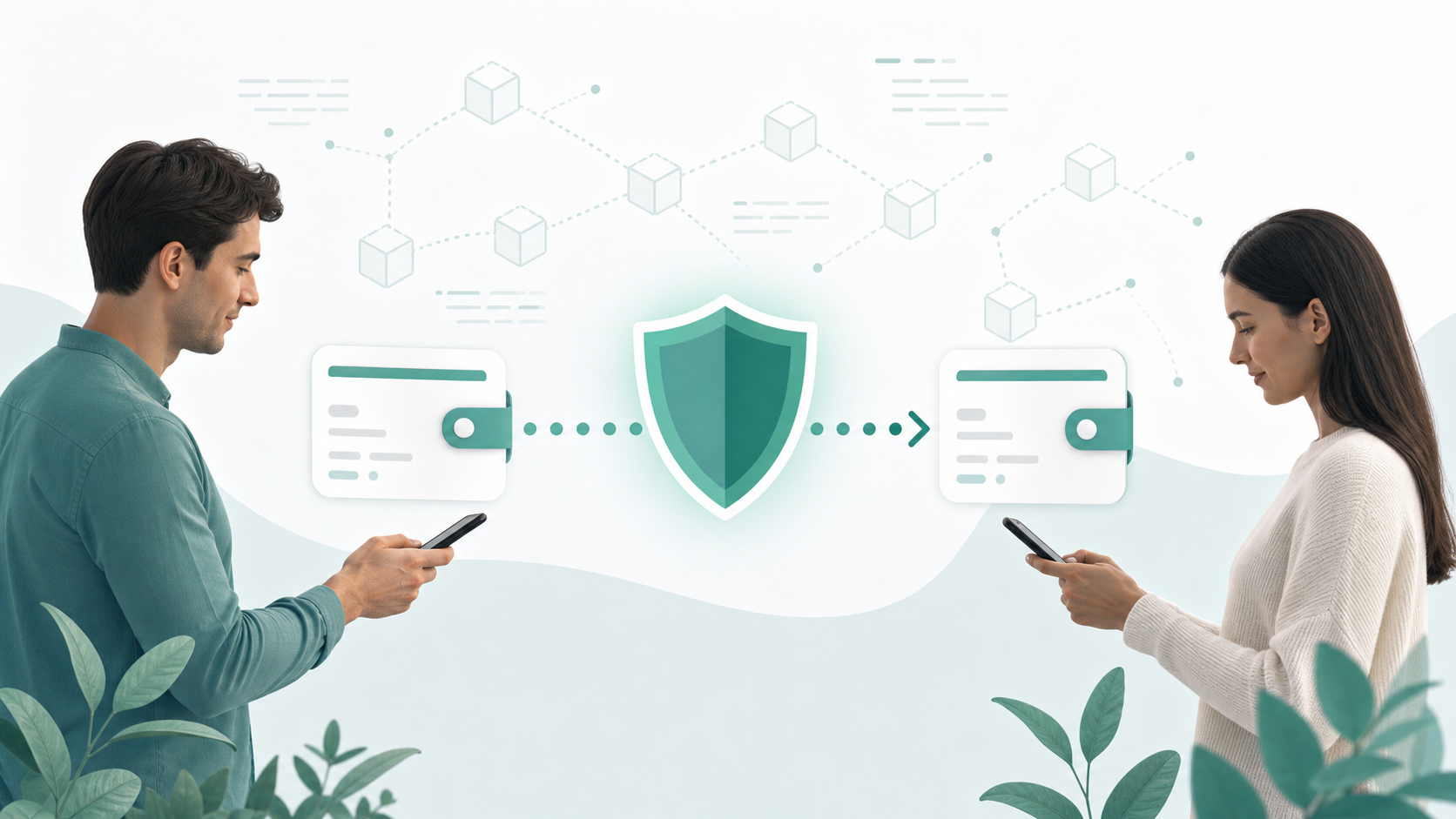
A dusting attack is when someone sends a tiny amount of crypto to a public address. The dust itself usually cannot steal your funds, expose your recovery phrase, or give anyone permission to move your assets. The risk is what can happen around that tiny transaction.
Dust can be used as a privacy signal, a scam lure, or transaction-history clutter. On Bitcoin-style chains, spending the dust together with other funds may give observers another clue that several outputs belong in the same wallet context. On account-style chains, tiny transactions and unknown tokens are more often part of spam, phishing, or address-poisoning attempts.
The safest beginner response is simple: do not panic, do not click anything, do not copy future destination addresses from suspicious transaction history, and do not interact with unknown tokens just because they appeared in your wallet. Treat the deposit as a signal to slow down and verify.
The Short Answer
Crypto dust is a tiny amount of crypto that is often too small to matter financially. A dusting attack is the deliberate use of tiny deposits to test, tag, confuse, or lure wallet users.
On its own, dust is not magic access to a wallet. A public address can receive funds from anyone, and receiving a transaction does not reveal a private key or seed phrase. If a stranger sends a tiny amount of BTC, ETH, USDT, or another asset to your public address, that fact alone does not mean your wallet was hacked.
The practical risk is indirect. If you later spend suspicious dust together with unrelated funds, click links attached to unknown tokens or memo fields, or copy a lookalike address from transaction history, you can create privacy or security problems that did not exist when the dust first arrived.
What Is Crypto Dust?
Crypto dust means a very small amount of cryptocurrency. The exact amount is not universal. It depends on the chain, wallet, fee environment, exchange rules, and asset involved.
In everyday wallet language, dust usually means "too small to care about as money." It might be a tiny Bitcoin output, a small token transfer, a spam NFT, or a token balance that is not worth the network fee required to move it. Some dust is harmless leftover change from normal use. Some is sent deliberately by someone else.
The important distinction is intent. A small leftover balance from your own activity is not automatically an attack. An unsolicited tiny deposit from an unknown sender is different because you do not know why it was sent or what the sender hopes you will do next.
What Is A Dusting Attack?
A dusting attack is an unsolicited tiny deposit sent to a public crypto address, usually to see whether the recipient later interacts with it or to create a visible event in the wallet's history.
The phrase is most often used in two overlapping ways. In the privacy version, the sender wants to see whether the dust later moves together with other funds. That movement can help connect activity that looked separate before. In the scam version, the tiny transaction is used to get the user's attention, place a message or unknown asset in the wallet, or create a misleading transaction history entry.
Those two versions can overlap, but they are not the same. A dusting attack can be about observation. It can also be about manipulation. In both cases, the right lesson for normal users is not fear. It is caution around unexplained wallet activity.
Why Dusting Matters For Privacy
Public blockchains are designed to be inspectable. Bitcoin.org's privacy guidance is blunt about this: Bitcoin transactions are public, traceable, and permanently stored. A public address does not reveal the private key behind it, but it can reveal transaction history involving that address.
That is why dusting can matter even when the amount is tiny. If a stranger can create a small public event at an address and then watch what later happens to that output, the output may become another clue. It may show whether the wallet software spends that tiny amount with other funds, whether old and new activity become connected, or whether the user treats several contexts as one wallet context.
The careful wording matters. Dusting may help observers link addresses or transaction contexts. It does not automatically identify the real-world person behind a wallet. Blockchain analysis often uses heuristics, and heuristics can have limits, errors, and false positives. Dusting weakens privacy by adding signals; it is not a guaranteed identity reveal.
Dusting On Bitcoin-Style UTXO Chains
Bitcoin-style wallets use a transaction model based on inputs and outputs. A Bitcoin transaction spends previous outputs as inputs and creates new outputs. Unspent outputs are often called UTXOs, short for unspent transaction outputs.
A simple way to think about it is that a Bitcoin wallet balance is not one single account balance in the bank-account sense. It is a set of spendable pieces. When you make a later payment, the wallet chooses one or more pieces to spend as inputs.
Dusting matters in that model because the tiny received output can become one of those pieces. If your wallet later combines the suspicious dust with other outputs in the same transaction, an observer may infer that the inputs belong to the same wallet context. Research on Bitcoin address clustering describes the multi-input heuristic as one of the core ways analysts group addresses that are jointly used as inputs in the same transaction.
Here is the beginner version: someone sends a tiny amount of BTC to one of your old receive addresses. If your wallet later spends that tiny output in the same transaction as other BTC, the transaction may create a visible connection. That connection does not prove who you are, but it can reduce the separation between pieces of your wallet activity.
This is one reason Bitcoin privacy guidance often recommends fresh receiving addresses. Trezor and Ledger both explain that Bitcoin-style wallets commonly show a new receive address for new payments, while previous addresses can still remain valid. Fresh receive addresses reduce simple address reuse, but later spending behavior can still create links.
Address Poisoning: The Lookalike-Address Version
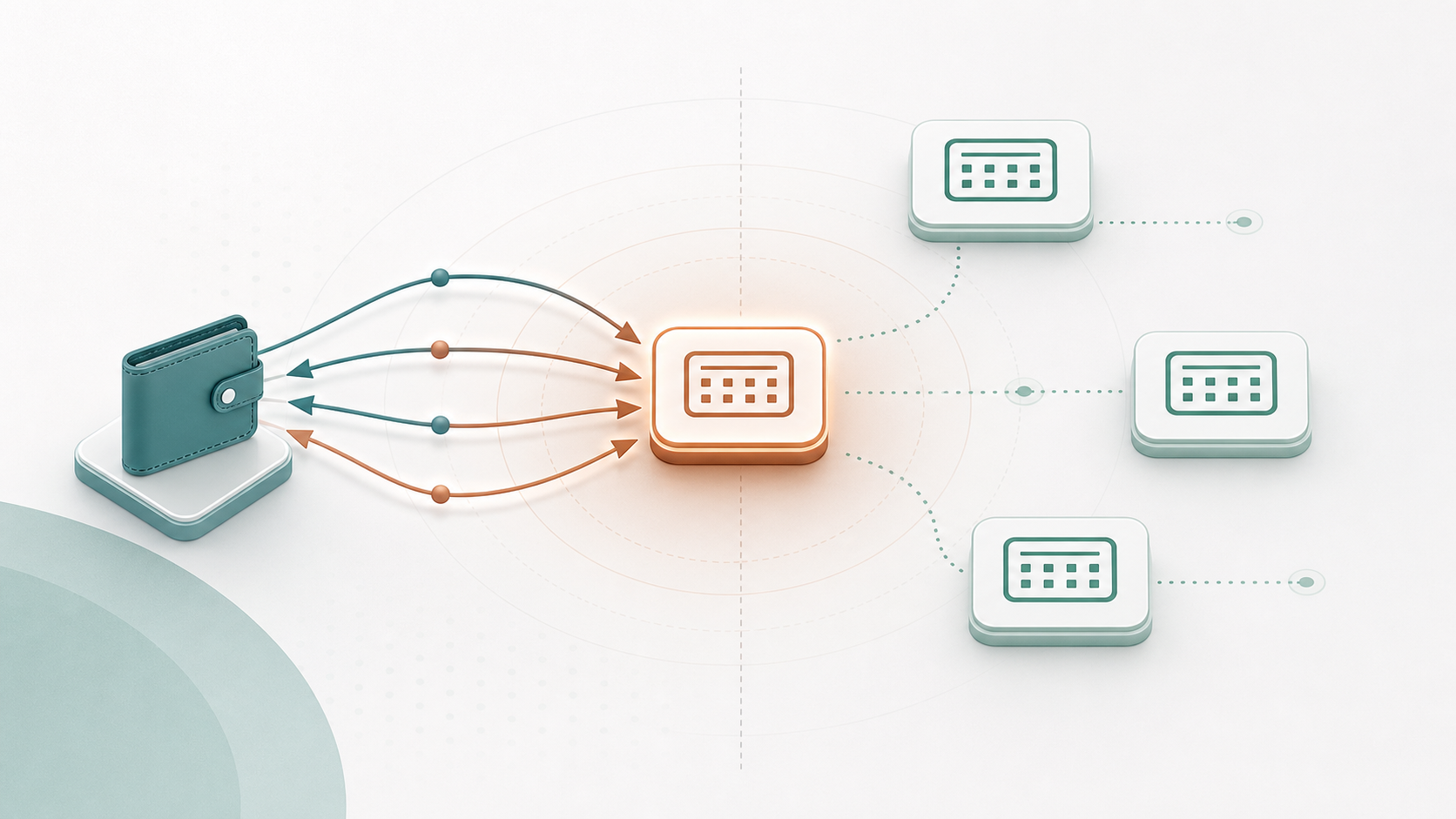
Address poisoning is related to dusting, but it deserves its own explanation. Instead of mainly trying to observe how dust is later spent, an address poisoning scam tries to exploit how users copy and recognize addresses.
The pattern is usually this: you send funds to a real address. A scammer then sends you a tiny transaction from a lookalike address, often one that resembles the real address at the beginning and end. Later, if you copy a destination from transaction history instead of from the trusted source, you may paste the scammer's address by mistake.
This works because crypto addresses are long and hard for humans to compare. Many users glance at the first and last characters. Attackers know that habit. The tiny transaction is not the theft by itself; it is the setup for a future copy-paste mistake.
The defense is boring and important: do not use suspicious transaction history as an address book. Verify the recipient address from the trusted source, such as the original app, contact, invoice, saved address book, or hardware-wallet screen. If an address appeared only because a stranger sent you a tiny transaction, treat it as untrusted.
What Dusting Cannot Do By Itself
Dusting cannot directly reveal your seed phrase. It cannot sign a transaction for you. It cannot give a stranger permission to spend your assets. It cannot install malware simply because a transaction appeared on a public blockchain.
That does not mean every unknown asset is safe to touch. It means the danger is usually somewhere else: a phishing link, a malicious token website, a misleading memo field, an address-copying mistake, or a wallet behavior you do not understand.
A tiny unknown deposit also does not prove that someone knows your identity. Public addresses can be found in many ways. They may be scraped from public posts, copied from transaction history, generated through broad spam campaigns, or targeted after visible onchain activity. The deposit proves that someone sent something to a public address. It does not prove they know the person behind it.
This distinction helps keep the response proportionate. You do not need to panic. You do need to avoid turning a small suspicious event into a larger problem through interaction.
What To Do If You Receive Dust
First, do nothing in a hurry. A tiny unknown deposit is rarely an emergency. Do not click links, visit token websites, call support numbers, scan QR codes, or trust memo text attached to the transaction. Treat all unsolicited metadata as untrusted.
Second, do not copy future destination addresses from suspicious transaction history. If the wallet history contains a tiny transaction from an unfamiliar address, that address should not become a shortcut. Always verify recipient addresses from the original trusted source.
Third, avoid interacting with unknown tokens just because they appeared in your wallet. On some chains, unknown tokens or NFTs may be spam, phishing, marketing, or transaction-history clutter. Do not assume that hiding, burning, swapping, transferring, or revoking an unknown token is safe in every wallet or on every chain. If your wallet has official guidance for suspicious assets, follow the wallet's documentation rather than random instructions.
Fourth, use labels where your wallet supports them. Mark the suspicious transaction, address, account, or output so future-you remembers what happened. Labels do not change the blockchain, but they can prevent accidental reuse or context mixing later.
Fifth, on Bitcoin-style wallets that support coin control, avoid spending suspicious dust together with unrelated funds when there is a clear and safe way to leave it alone. Coin control is a wallet feature that lets users choose which outputs to spend. If you do not understand the feature, do not improvise under pressure. Read the wallet's official documentation first.
Chain And Wallet Differences
Dusting does not look exactly the same on every chain.
On Bitcoin-style UTXO chains, the main privacy concern is often whether a tiny output later gets spent with other outputs. Address reuse, fresh receive addresses, and coin selection matter because the transaction model is built around spendable outputs.
On Ethereum-style account chains, users usually interact through accounts that can hold assets, send transactions, and use smart contracts. The suspicious event may be a tiny transfer, an unknown token, a spam NFT, a misleading token name, or transaction-history clutter. The privacy and scam risks are still real, but they do not map perfectly to Bitcoin-style UTXO handling.
Some chains also allow memo fields, token metadata, or transaction-history patterns that attackers can abuse for phishing. TRM Labs has documented address-poisoning patterns on TRON, including tiny transfers from visually similar addresses. That does not mean every tiny transfer on every chain is the same attack. It means users should treat unexpected micro deposits and lookalike addresses as suspicious until verified.
Wallet behavior varies too. One wallet may hide spam assets. Another may show them prominently. A hardware wallet may present receive-address verification very differently from a mobile hot wallet. The article-level rule is general: do not interact blindly, and check official wallet documentation for chain-specific handling.
Common Misconceptions
"A tiny deposit means my wallet was hacked."
Usually no. A public address can receive funds from anyone. Receiving funds is not the same as losing control of the wallet.
"Dust can steal my seed phrase."
No. A public transaction does not expose a recovery phrase. Your seed phrase is at risk if you type it into a phishing site, store it insecurely, share it, or use compromised software, not because a stranger sent a tiny deposit.
"Ignoring dust always solves everything."
Ignoring suspicious assets is often safer than interacting with them, but the right handling depends on the chain and wallet. On UTXO-style wallets, the question is whether the dust might be accidentally spent later. On account chains, the concern may be spam, phishing, or address poisoning.
"A fresh address makes me anonymous."
No. Fresh receive addresses reduce simple address reuse. They do not erase public transaction history, hide exchange records, or stop every form of blockchain analysis.
"Address poisoning and dusting are exactly the same."
They overlap, but they are not identical. Dusting is about tiny unsolicited deposits. Address poisoning is about tricking someone into trusting or copying a lookalike address.
FAQ
What is a dusting attack in crypto?
A dusting attack is when someone sends a tiny amount of crypto to a public address. The goal may be to see whether the dust later moves with other funds, to create transaction-history clutter, or to lure the user into unsafe interaction.
Can dusting steal my crypto?
Dusting cannot steal crypto by itself. The risk comes from later actions such as clicking phishing links, trusting suspicious memo fields, copying a lookalike address, or spending dust in a way that links wallet activity.
Can someone send crypto to my wallet without permission?
Yes. Public addresses are designed to receive transactions. You usually cannot stop strangers from sending a tiny amount to an address that exists on a public chain.
Should I move or delete a tiny unknown token?
Do not treat moving, deleting, burning, swapping, or revoking an unknown token as a universal rule. Wallet and chain behavior varies. If the asset is suspicious, avoid interacting with it and check the wallet's official guidance.
What is the difference between dusting and address poisoning?
Dusting is the use of tiny unsolicited deposits. Address poisoning is a scam pattern where a tiny transaction from a lookalike address is used to trick the victim into copying the wrong address later.
Why does dusting matter more on Bitcoin-style UTXO chains?
Bitcoin-style transactions spend previous outputs as inputs. If suspicious dust is later spent with other outputs, the transaction may help observers link those outputs to the same wallet context. That is a privacy concern, not an automatic identity reveal.
Does receiving dust mean someone knows who I am?
Not necessarily. It means someone sent a transaction to a public address. They may not know anything about the person behind that address.
How do I protect myself from dusting or address poisoning?
Do not click links or trust metadata from unknown transactions. Do not copy addresses from suspicious wallet history. Verify recipient addresses from a trusted source. Use labels, fresh receive addresses, separate accounts, or coin control where your wallet and chain support them.
Does using a new address stop dusting?
Fresh addresses reduce simple address reuse, but they do not stop every unsolicited transaction or guarantee anonymity. They are one useful privacy habit, not a complete privacy solution.
Related Reading
- What Is Address Reuse?
- Why Does My Crypto Wallet Generate A New Address?
- Wallet Vs Account Vs Address In Crypto
- What Is Wallet Clustering?
- What Information Is Public On A Blockchain?
- Crypto Wallet Privacy Checklist
- Can People See My Crypto Wallet Balance?
Summary
Dusting is not free money and it is usually not an emergency. It is a small public event that can become useful to scammers or observers if the user reacts carelessly.
The calm response is to avoid interaction, verify addresses from trusted sources, and use wallet privacy features carefully when they are available. Dust cannot steal a wallet by itself, but it can expose bad habits around address reuse, transaction history, and unknown assets.