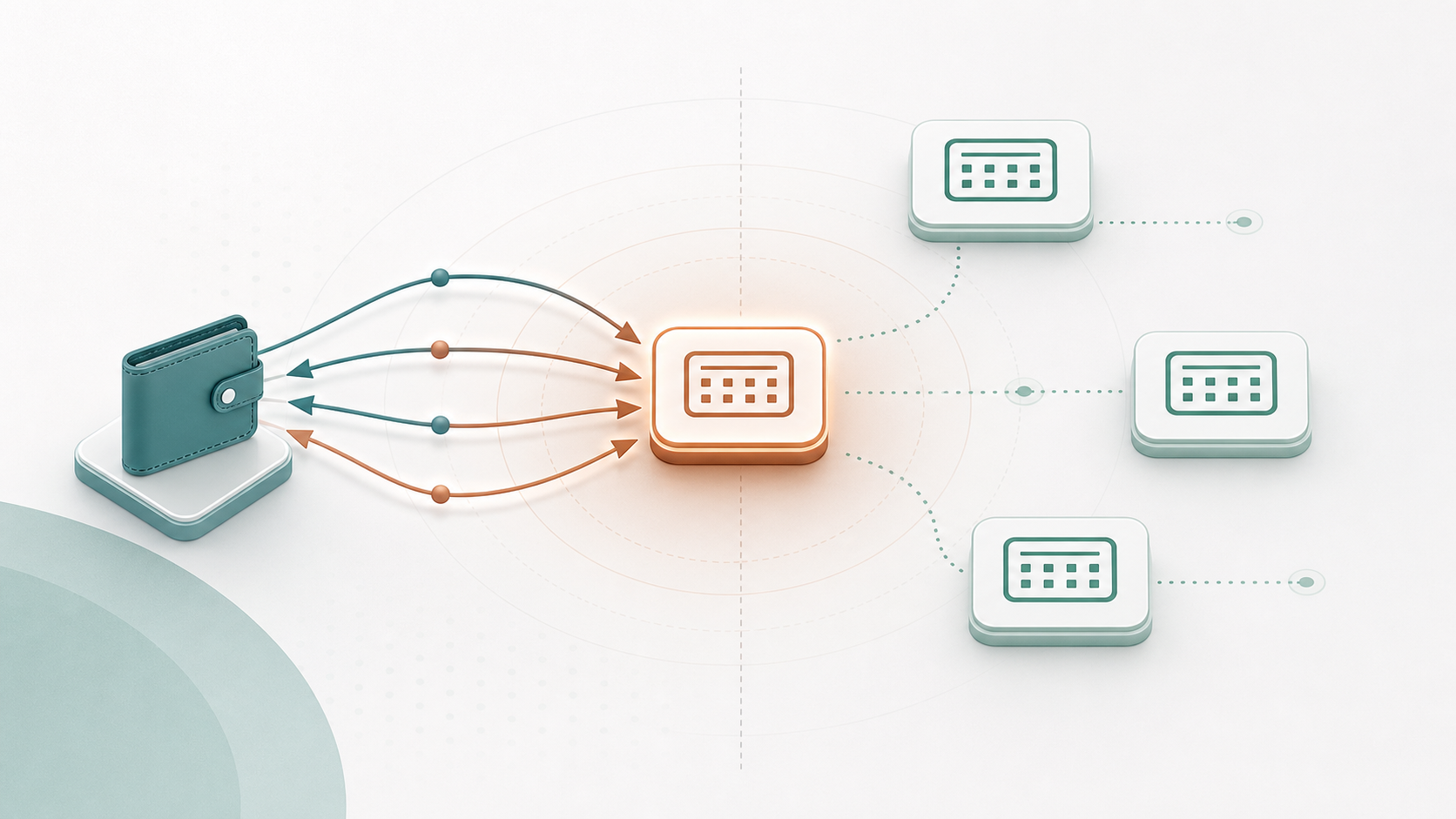
A crypto wallet's private transaction mode only hides the parts of a transaction that the specific feature is designed to hide. It does not automatically make the whole wallet anonymous, remove every onchain trace, hide your identity from every party, or erase network and app metadata.
One feature might hide transfer amounts while leaving token accounts visible. Another might reduce the direct public link between sender and recipient while the transaction, amount, asset, timing, and broader wallet activity remain visible. A zero-knowledge proof can prove something without revealing the secret behind the proof, but the rest of the wallet flow still matters.
The useful question is not "is this private?" The useful question is "what is hidden, from whom, what remains visible, and under what conditions?"
The Short Answer
"Private transaction" is a label, not a single technical guarantee. In crypto, that label can point to amount privacy, balance privacy, sender-recipient link reduction, transaction-graph privacy, identity pseudonymity, private reads, network metadata protection, or selective disclosure. Those are different claims.
If a wallet says a transaction is private, you still need to ask what kind of privacy it means. Does it hide the amount from the public? Does it hide the recipient from the sender's normal transaction graph? Does it hide the wallet address from the counterparty? Does it hide app logs, RPC provider data, IP address, fees, timing, or wallet history? The answer may be different for each feature.
This matters because public blockchains are transparent by design. A privacy feature can improve one part of the picture while leaving other parts exposed. That does not make the feature useless. It means the claim should be read precisely.
Why Private Transaction Does Not Mean One Thing
Normal users often see words like private, confidential, shielded, anonymous, no-KYC, self-custodial, or privacy mode used close together. Those words are not interchangeable.
Confidential usually means some transaction data, often the amount or balance, is hidden from public view. Anonymous usually means the visible link between participants is hidden or weakened. Pseudonymous means activity is tied to an address or account rather than a legal name, but that address can still build a public history. Selective disclosure means some information is hidden by default but can be revealed under defined controls.
A wallet feature might use one of these ideas without using the others. It may hide a transfer amount but leave both token accounts public. It may make a direct wallet-to-wallet transfer harder to follow while still showing that a transaction happened. It may protect onchain data but not protect metadata created by the app, provider, browser, device, or network path.
That is why product wording should be treated as a starting point, not the final answer. The details live in the docs, the design, the provider involved, the supported assets, and the current availability of the feature.
Six Privacy Properties To Separate
The first property is amount and balance confidentiality. This hides the size of a transfer or the balance of a token account. It can be useful when users do not want every payment or holding visible to the public. It does not automatically hide which accounts are involved.
The second property is sender-recipient link reduction. This tries to make the direct public connection between the sender's wallet and the recipient's wallet less obvious. It may still leave a visible transaction, asset, amount, fee, time, or provider flow.
The third property is transaction-graph anonymity. This is a stronger claim. It means the system hides or weakens the visible graph of who transacted with whom. Do not assume a wallet has this property just because it uses the word "private."
The fourth property is identity pseudonymity. A public address may not show a legal name by itself, but it can still be linked to exchange records, counterparties, public posts, app activity, leaked data, or repeated behavior. Private transaction mode does not automatically remove those links.
The fifth property is network and session metadata privacy. IP address, RPC provider logs, frontend analytics, device identifiers, browser storage, support logs, timing, and transaction submission paths can all matter. A cryptographic proof can hide a value inside the proof while the surrounding app flow leaks other clues.
The sixth property is selective disclosure. Some privacy designs intentionally allow specific users, issuers, auditors, providers, or authorized parties to see or verify limited information. Selective disclosure is not the same thing as total secrecy.
Confidential Transfers Are Not Anonymous Transfers
Solana's confidential-transfer documentation is a useful example because it is very specific about what is private and what is not. The docs describe confidential transfers as token transfers where the transfer amount is not revealed. They also say only transfer amounts and token balances are private, while token account addresses remain public.
That is confidentiality, not full anonymity. If the amount is hidden but the token accounts remain visible, an observer may still see that specific accounts are involved in a transaction flow. The feature changes what can be learned from the public data, but it does not make the participating accounts disappear.
There is also an availability caveat. As of this draft check on June 10, 2026, the Solana confidential-transfer page says the ZK ElGamal Program is temporarily disabled on mainnet and devnet during a security audit, so the confidential-transfer extension is currently unavailable even though the concepts remain valid. That is exactly why product and protocol availability needs to be rechecked before publication.
The lesson is broader than Solana. When a feature says "confidential," ask what is confidential. The amount? The balance? The participant accounts? The asset? The timing? The app metadata? The answer may be narrower than the label feels.
What Zero-Knowledge Proofs Can And Cannot Hide
A zero-knowledge proof lets someone prove that a statement is valid without revealing the underlying information used to prove it. That can be powerful for privacy. A user might prove membership in a group, eligibility for an action, or validity of a transaction rule without exposing the private data behind the proof.
But a proof is not the whole user journey. Ethereum.org's privacy-app guidance makes this limitation clear: even a perfect proof can fail to protect privacy if the wallet flow leaks the link. Funding patterns, reused wallets, public inputs, calldata, events, frontend analytics, local storage, support logs, IP address, RPC provider, session data, and anonymity-set size can all weaken the privacy outcome.
For readers, the practical version is simple. ZK can hide the information inside the proof. It does not automatically hide everything around the transaction. If the app exposes public inputs, if the wallet funds the action from a linked account, or if the same session metadata ties the flow together, the privacy result may be weaker than the cryptography sounds.
This does not make ZK a marketing trick. It means ZK should be understood as a component. The full privacy claim depends on how the component is used.
A Wallet Private-Send Example
Solflare's Private Send announcement is a useful product-label example because it directly separates what the feature claims to hide from what remains visible. Solflare describes Private Send as an optional feature inside the normal send flow, off by default and enabled per transaction.
According to Solflare's own announcement, Private Send is meant to transfer supported tokens without publicly linking the sender's wallet to the recipient's wallet onchain. The same announcement also says the transaction is still visible on the blockchain, including the amount, and that the sender can track activity inside the wallet.
That is the right way to read a private-send label: as an attributed feature claim with boundaries. It may be designed to reduce a direct sender-recipient link. It is not the same as saying the transaction is invisible, the amount is hidden, every provider sees nothing, or the user is anonymous to every possible observer.
Solflare also says its Privacy Aggregator works through integrated providers, with Houdini as the first provider at launch, and that applicable fees and estimated processing times are shown before confirmation. Those operational details matter. A wallet privacy feature can depend on providers, supported assets, routing, fees, timing, availability, records, audits, and terms that are outside the simple word "private."
This article is not endorsing or evaluating that feature. The point is the method: read the claim feature by feature, and keep the remaining visible data in view.
What Can Still Remain Visible
A private transaction mode may still leave the transaction itself visible. It may still show the asset, amount, timestamp, fee, contract interaction, token account, sender-side activity, recipient-side activity, or related wallet history. The exact list depends on the chain and feature.
It may also leave offchain records. Wallet providers, RPC providers, integrated privacy providers, frontends, support systems, analytics tools, browsers, devices, counterparties, exchanges, and apps can all create information outside the blockchain. A feature that hides a value onchain does not automatically delete those records or stop every party from seeing metadata.
Timing can remain important too. If a user creates a private action immediately after a visible funding transaction, or repeats the same pattern across accounts, observers may still infer relationships. If only a small number of people use a feature, the privacy set may be smaller than expected.
The safest expectation is modest: private transaction mode can reduce specific forms of exposure. It does not turn a transparent blockchain into a private bank account, and it does not remove the need to understand what the feature is actually doing.
Selective Disclosure Is Not Total Secrecy
Some privacy systems are designed to reveal limited information to specific parties. That can sound contradictory at first, but it is a real design goal: hide sensitive data from the public while still allowing certain checks, audits, proofs, or disclosures under defined rules.
Compliance and policy papers often describe this as a middle ground between total public transparency and total opacity. The details vary by system. Some designs talk about view keys, transaction-level disclosure, asset disclosure, set membership proofs, allow lists, or other ways to prove or reveal something without exposing everything to everyone.
For a normal user, the important point is expectation setting. If a system has selective disclosure, ask who can disclose what, who can request or verify it, whether disclosure is user-controlled, whether it is built into the protocol or handled by a provider, and what records exist outside the chain. Do not assume "private" means no one can ever see anything.
A Checklist For Evaluating Private Transaction Claims
Start with the exact data. Does the feature hide the amount, balance, sender, recipient, transaction graph, identity link, public inputs, IP address, RPC metadata, app logs, or only one of those things?
Then ask hidden from whom. A feature may hide data from the public while still leaving it visible to the user, counterparty, wallet provider, privacy provider, RPC provider, auditor, issuer, or another authorized party. "Private from casual block-explorer viewers" is not the same as "private from everyone."
Check what remains public. Look for transaction existence, asset, amount, addresses, timing, fees, contract calls, token accounts, wallet history, and related app interactions. If a feature hides one property but leaves three others visible, that can still be useful, but it is not total privacy.
Check whether the feature is optional or default. If it is enabled per transaction, users can accidentally send publicly. If it is default, users still need to know what the default covers.
Check supported chains, assets, transaction types, limits, fees, and processing time. Product claims often apply only to specific paths. A feature may support one chain, one token set, or one flow while normal transactions remain public.
Finally, check the current docs, audits, availability notes, and provider terms. Privacy features are software and cryptographic systems. They can have bugs, audits, pauses, provider changes, or limitations that are not obvious from a wallet button.
Common Misconceptions
The first misconception is that private mode means the whole transaction disappears. Usually it does not. A transaction can remain visible while one property, such as the amount or direct sender-recipient link, is hidden or weakened.
The second misconception is that confidential means anonymous. Confidentiality can hide amounts or balances while addresses or transaction structure remain public. That is useful, but it is narrower than anonymity.
The third misconception is that ZK means everything is private. A zero-knowledge proof can prove a statement without revealing the witness, but wallet funding, public inputs, calldata, frontend analytics, RPC metadata, and session behavior may still matter.
The fourth misconception is that no-KYC, non-custodial, private, confidential, and anonymous all mean the same thing. They do not. A service may collect less identity information without hiding the onchain transaction graph. A wallet may be self-custodial while still using public chains. A confidential transfer may hide amounts without hiding accounts.
The fifth misconception is that a wallet's label is enough proof. Labels are short because interfaces are small. Before trusting the claim, read the feature documentation, availability notes, provider details, and independent security context where available.
FAQ
What does private transaction mode hide in a crypto wallet?
It hides only the data the specific feature is designed to hide. That may be the amount, balance, direct sender-recipient link, proof input, or another property. It does not automatically hide every wallet, identity, network, app, or transaction detail.
Is a confidential transfer the same as an anonymous transfer?
No. A confidential transfer usually means some transaction values, such as amounts or balances, are hidden. An anonymous transfer is a stronger claim about hiding or weakening the visible relationship between participants.
Does private mode hide the amount?
Sometimes. Some confidential-transfer designs focus on amount or balance privacy. Other private-send features may leave the amount visible while trying to reduce the direct wallet-to-wallet link. Check the feature documentation.
Does private mode hide my wallet address?
Not necessarily. A feature can hide an amount while account addresses remain public. Another feature can reduce a direct public link while your wallet still has visible history elsewhere. Address privacy is feature-specific.
Can a zero-knowledge proof make a whole wallet private?
No. A ZK proof can hide the information used inside the proof. It does not automatically hide wallet funding, app logs, public inputs, IP address, RPC provider data, transaction timing, or every other part of the user flow.
If the transaction still appears onchain, what changed?
The feature may have hidden or weakened one part of the public picture. For example, the amount may be hidden, or the direct sender-recipient link may be less visible. The transaction can still exist onchain.
Can wallet providers, RPC providers, or apps still see metadata?
They may be able to, depending on the design. A private onchain proof does not automatically hide IP address, RPC provider logs, frontend analytics, device metadata, support logs, provider records, or counterparty records.
What should I check before trusting a wallet privacy claim?
Check what is hidden, from whom, what remains public, whether the feature is optional or default, which chains and assets are supported, which provider or proof system is involved, and whether availability, fees, timing, audits, logs, and disclosure controls are clearly documented.
Does private transaction mode make crypto untraceable?
No. Avoid any claim that a wallet mode makes crypto untraceable. A privacy feature can reduce specific forms of visibility, but tracing risk depends on the full chain, app, wallet, provider, counterparty, and metadata context.
Related Reading
- Privacy By Default In Crypto Wallets
- What Your Wallet Reveals Onchain
- What Is Wallet Clustering?
- What Private Swaps Can And Cannot Protect From
- What Is A Private Swap In Crypto?
- No-KYC Vs Private Crypto Swaps: What Is The Difference?
- RPC Providers, IP Addresses, And Wallet Privacy
Summary
Private transaction mode is useful only when you know what kind of privacy it provides. It may hide amounts, balances, direct wallet links, proof inputs, or specific disclosure details. It may also leave the transaction, participants, amount, timing, provider records, wallet history, or network metadata visible.
Read privacy claims as precise feature claims, not blanket guarantees. Ask what is hidden, from whom, what remains visible, and whether the current docs, audits, provider details, and availability notes support the claim.