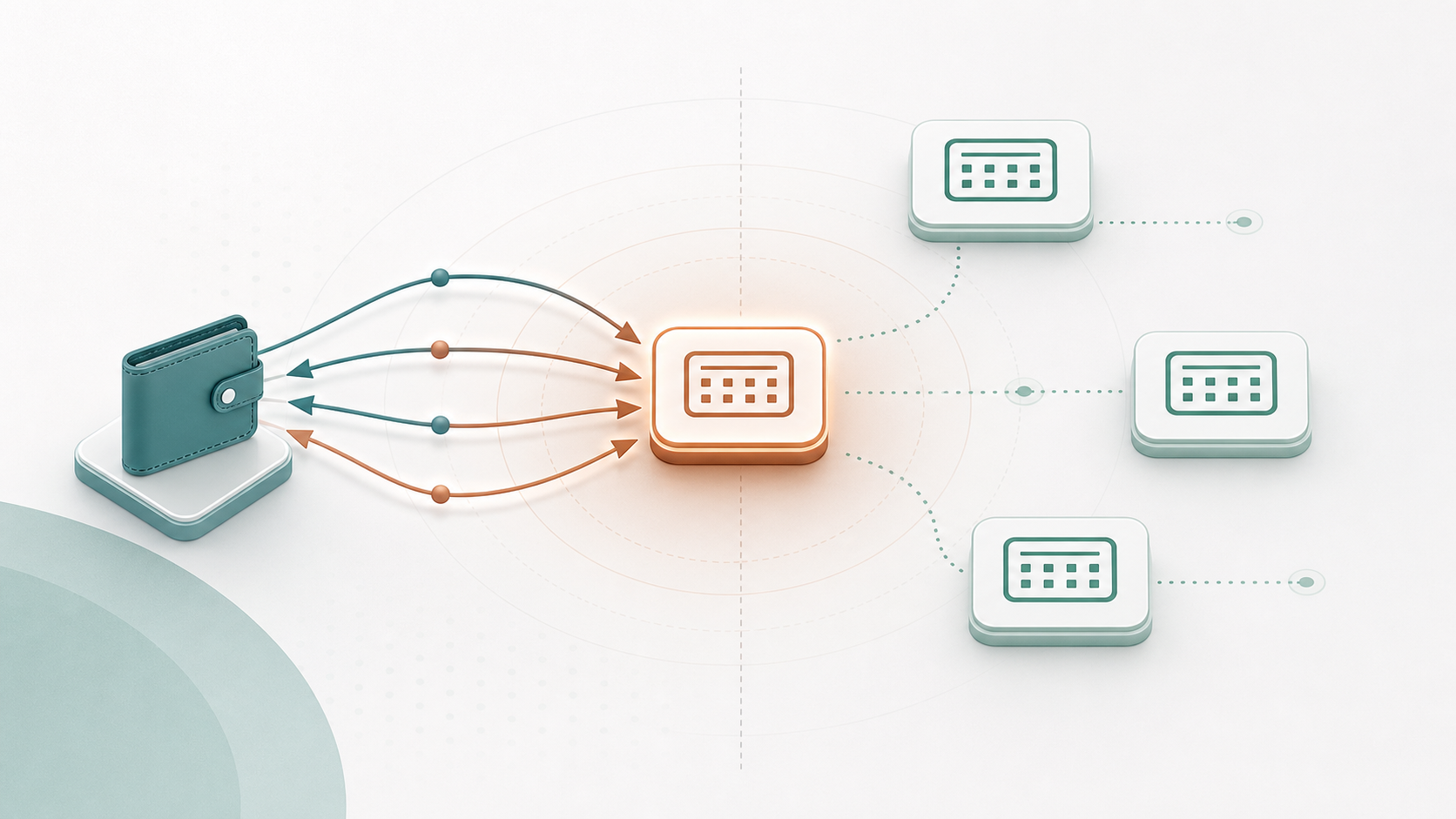
Most public crypto payments reveal more than the payment itself. A private swap is a crypto swap or payment flow designed to reduce the direct link between the wallet that sends funds and the wallet that receives them. That matters for normal people, not only traders or privacy specialists. If you send crypto to a friend from a public wallet, your friend may be able to inspect the sending address, follow its history, see balances, and connect that payment to other activity. In traditional banking, paying someone does not normally hand them a public window into your whole account history. Crypto should not require that level of exposure for everyday payments either.
The Simple Problem: A Crypto Payment Can Reveal Too Much
On many public blockchains, a wallet address is not just a payment destination. It is also a public trail. Bitcoin.org explains that Bitcoin transactions are public, traceable, and permanently stored, and that anyone can see the balance and transactions of a used address. Ethereum.org explains that block explorers can show account addresses, balances, token holdings, transaction histories, transaction hashes, timestamps, sender and recipient addresses, fees, and other onchain details.
So when you pay someone directly, you may expose more than:
- "I sent you this payment."
You may also expose:
- What wallet you paid from.
- What assets that wallet has held.
- Other addresses that wallet interacted with.
- Previous payments.
- Future payments from the same address.
- Patterns that analytics tools or curious people can inspect later.
The issue is not that your legal name is written onchain by default. It usually is not. The issue is that public wallet history can become linked to people over time through exchanges, apps, social posts, repeated address use, invoices, or simple screenshots.
Why Everyday Users Need Payment Privacy
Imagine you owe a friend for dinner and send them crypto. If you send from your main wallet, they might be able to paste your address into a block explorer and see more than the dinner payment. Depending on the chain and wallet, they may see balances, token holdings, NFTs, old transfers, business activity, or other payments that were never meant to be part of the conversation. That is not a normal privacy standard.
In banking, a friend does not see your full account balance because you paid them back. A freelancer's client does not automatically see every other client. A business supplier does not need a live map of the company's treasury. Private crypto payments are about bringing that basic expectation into crypto: the recipient should be able to receive funds without automatically learning the sender's whole wallet story, and the sender should not always need to know the recipient's main wallet either.
What a Private Swap Tries To Do
A regular swap changes one crypto asset into another. A private swap adds a privacy goal: reduce the visible connection between the input side and the output side. In plain English, a private swap tries to make this less obvious:
Wallet A sent funds -> Wallet B received funds
Depending on the design, a private swap or private payment flow may try to reduce:
- Direct sender-to-recipient wallet exposure.
- Easy address-to-address linking.
- Recipient visibility into the sender's funding wallet.
- Sender visibility into the recipient's long-term wallet.
- Public-chain context around a simple payment.
That does not mean every private swap works the same way. Some use exchanges, liquidity routes, privacy layers, shielded systems, or other mechanisms. Some are better suited for swaps. Others are built around payment links or invoices. The important question is not "is it private?" in the abstract. The better question is:
What specific link is this tool trying to reduce, and what can still be seen?
Private Does Not Mean Magic
Private swaps should not be treated as an invisibility button. Public chains can still show transactions. Providers may have their own policies, compliance checks, logs, limits, and supported assets. Timing, amounts, deposits, withdrawals, wallet behavior, and offchain records may still matter. Blockchain analytics vendors such as TRM describe tracing as a process that combines public onchain data with offchain context to surface patterns and possible associations.
So the responsible way to think about private swaps is:
- They can reduce unnecessary exposure.
- They can improve payment privacy.
- They can make casual wallet snooping harder.
- They cannot guarantee total anonymity.
- They do not remove legal, tax, or compliance obligations.
That distinction matters. Legitimate privacy is about data minimization, safety, business confidentiality, and personal financial dignity. It is not about pretending rules do not exist.
Why Private Payment Links Are Useful
Private payment links are one of the easiest ways to understand the use case. Instead of sending someone your main wallet address and asking them to pay it directly, a payment link can act as a privacy layer between sender and recipient. The sender gets a simple payment flow. The recipient gets paid without unnecessarily exposing their main wallet to the sender.
This is useful for:
- Friends paying each other.
- Freelancers receiving from clients.
- Businesses collecting crypto payments.
- Public creators who do not want to reveal their main wallet.
- Teams that do not want every counterparty seeing treasury activity.
Houdini Pay is one example of this category. Its product page describes private payment links where the recipient can receive a payment without revealing their public wallet address to the sender. That is the right kind of everyday privacy problem to solve: not "how do I disappear?", but "how do I avoid exposing my whole wallet history just because someone needs to pay me?"
What Private Swaps Can Help With
Private swaps and private payment flows can be useful when they reduce a clear, specific exposure:
- A friend does not need to see your main wallet history.
- A client does not need to know every wallet you use.
- A supplier does not need to inspect your treasury.
- A public wallet does not need to become your entire financial identity.
- A simple payment does not need to create a long-term social graph.
This is closer to ordinary financial privacy. Most people do not publish their bank statements. Most businesses do not want every customer to see every other customer. Crypto should be open where verification matters, but users still need tools that reduce unnecessary personal exposure.
What Private Swaps Cannot Guarantee
A private swap cannot automatically fix every privacy mistake. It may not protect you if:
- You reuse the same address everywhere.
- You publicly post your wallet and identity together.
- You move funds in obvious patterns.
- You use apps or services that collect metadata.
- You assume one private payment erases past wallet history.
- You ignore the provider's terms, limits, or compliance checks.
The safest mental model is not "private swap equals anonymous." It is "private swap equals less unnecessary linkage, if the tool is designed well and used carefully."
FAQ
Is a private swap the same as an anonymous swap?
Not exactly. "Anonymous" is often used too loosely in crypto. A better phrase is "privacy-focused swap." The goal is usually to reduce specific links, not to guarantee that no one can ever infer anything.
Why not just use a new wallet?
Using separate wallets can help reduce obvious linking, but it does not solve everything. Funding patterns, withdrawals, timing, apps, address reuse, and other metadata can still create connections.
Can my friend see my whole wallet if I pay them?
If you pay from a public-chain address, they may be able to inspect that address in a block explorer. What they can see depends on the chain and wallet, but on many public chains a lot of address history is visible.
Are private swaps only for criminals?
No. Financial privacy is normal. Friends, freelancers, creators, traders, businesses, and teams can all have legitimate reasons to avoid exposing wallet history. Privacy does not remove legal or compliance responsibilities.
What should I look for in a private payment tool?
Look for clear explanations of what the tool protects, what it does not protect, fees, supported assets, custody model, compliance policy, and whether the tool overpromises anonymity.
Short Summary
A private swap is a crypto swap or payment flow that tries to reduce the direct public link between sender and recipient wallets. The everyday reason is simple: paying someone should not expose your whole wallet history. Used responsibly, private swaps can make crypto payments feel closer to normal financial privacy. They do not guarantee anonymity, but they can reduce unnecessary exposure for ordinary users.
Sources
- Bitcoin.org:
https://bitcoin.org/en/protect-your-privacy - Ethereum.org:
https://ethereum.org/en/developers/docs/data-and-analytics/block-explorers/ - TRM Labs:
https://www.trmlabs.com/resources/blog/the-fundamentals-of-cryptocurrency-transaction-tracing - Houdini Pay:
https://houdiniswap.com/pay
Editor Note
Reviewed 2026-06-09 by Sofia. Tightened the summary language and kept the article careful about private swaps reducing links rather than guaranteeing anonymity. No new verification TODOs added.