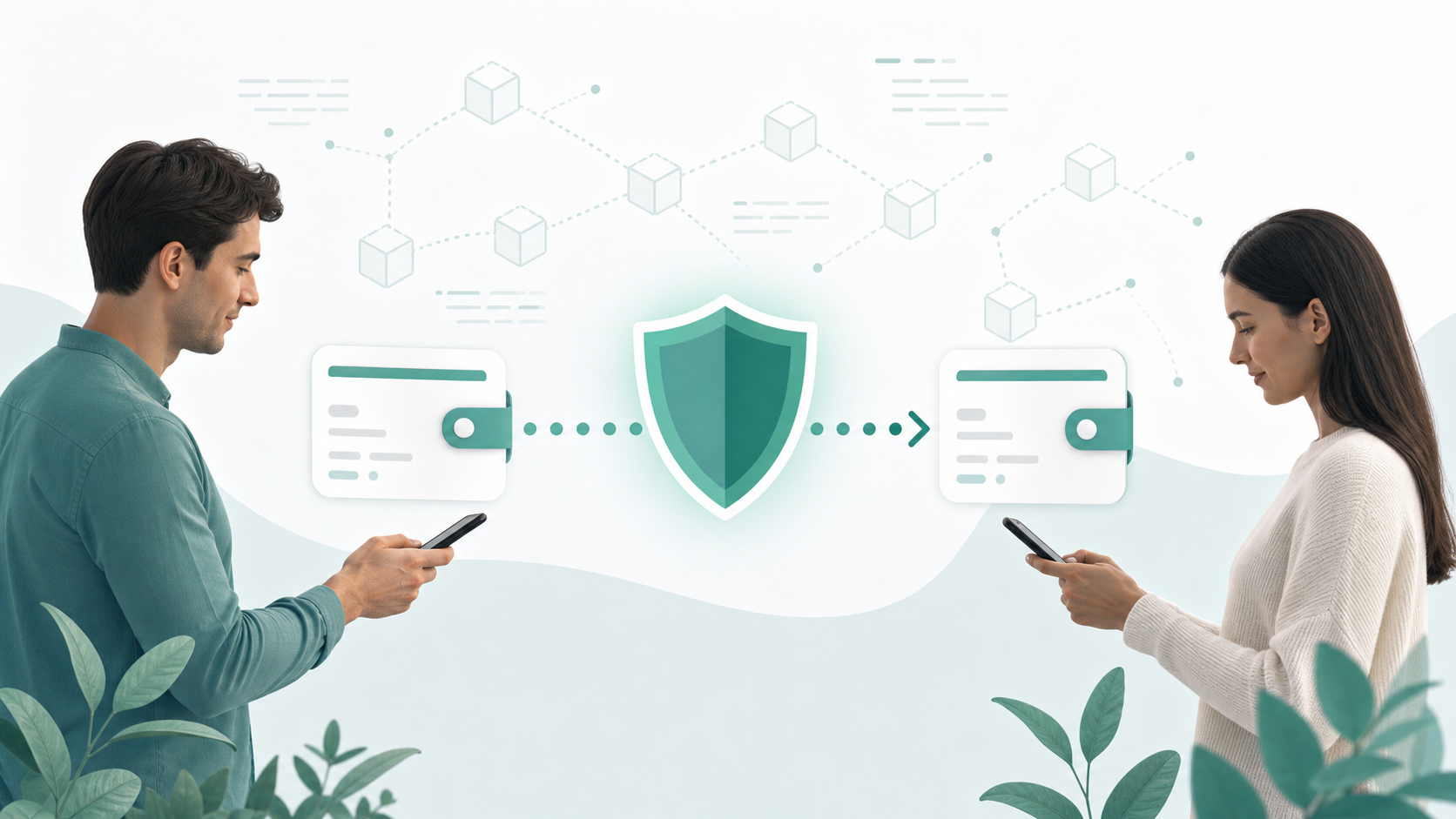
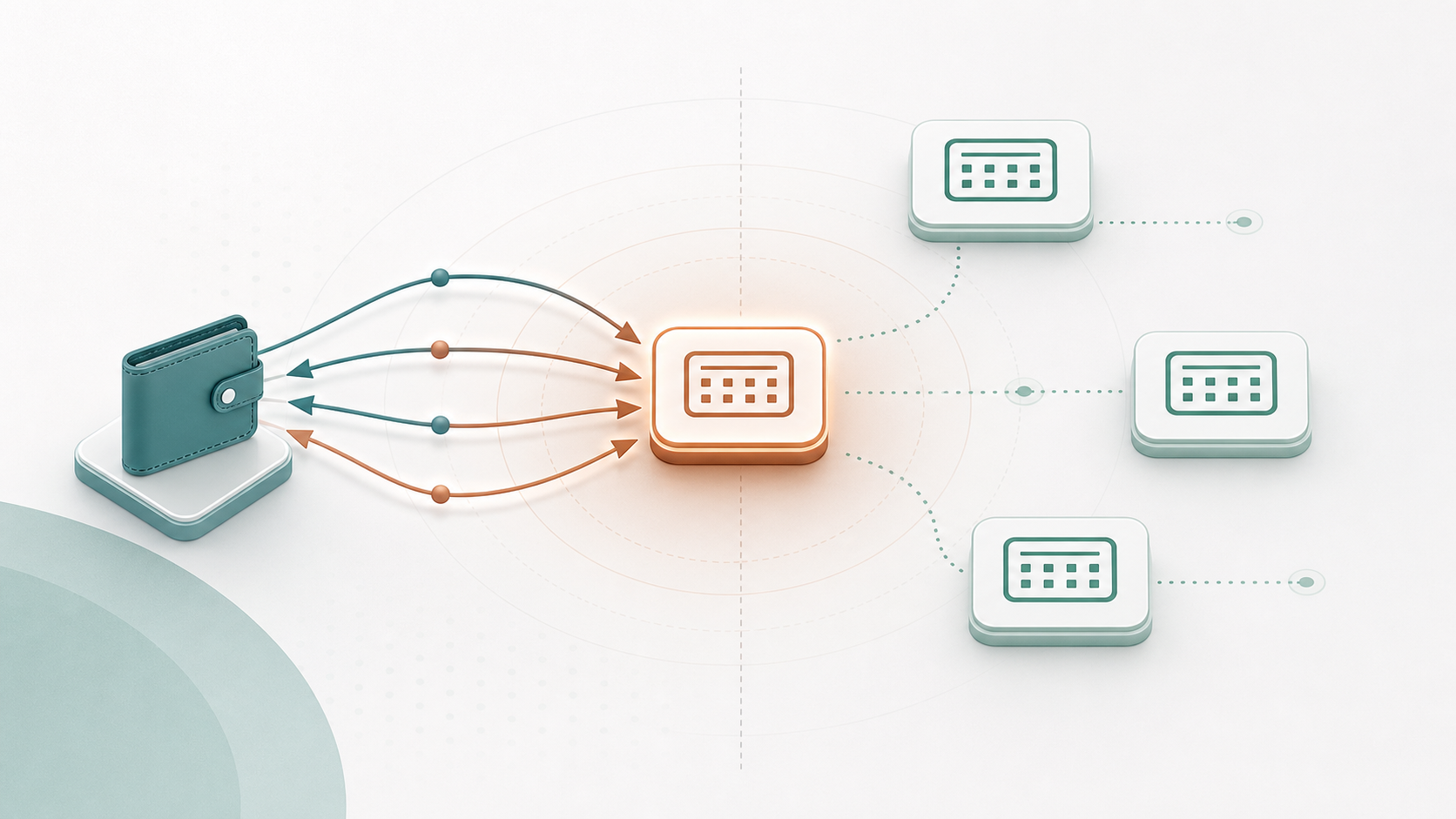
Your crypto wallet may generate a new address to reduce address reuse. This is especially common in Bitcoin-style wallets, where one wallet can manage many receive addresses under the same seed or account structure.
A new receive address usually does not mean you created a new wallet. It also does not mean your funds are split in a way your wallet cannot understand. The simpler explanation is that the wallet is trying to avoid making one public address become the place where every incoming payment is easy to inspect.
The important caveat is that fresh addresses improve privacy hygiene; they do not make crypto anonymous. Public-chain transactions can still be visible, traceable, and linkable through other signals.
The Short Answer
Many wallets can create more than one receive address from the same recovery phrase or account structure. On Bitcoin-style UTXO chains, wallets commonly show a fresh receiving address for each payment because reusing one public address can make your payment history easier to inspect.
Old receive addresses can still be part of the same wallet history in many Bitcoin-style wallets. Your wallet software tracks them for you, so you do not need every payment to arrive at the same visible address. Still, exact address behavior depends on the wallet and chain, so wallet-specific warnings matter.
Ethereum-style accounts often feel different. Many EVM users reuse one account address across Ethereum and compatible networks, while newer multichain wallet interfaces may group different network-specific addresses under one account.
Wallet, Account, And Address In Plain English
A wallet is the software and key structure that lets you manage crypto. In practice, people use "wallet" to mean the app, the recovery phrase, the hardware device, or the whole place where they view funds. That casual language is useful, but it can also make address behavior confusing.
An account is a more specific grouping inside a wallet. MetaMask's multichain account documentation describes a wallet as a cluster of accounts governed by a source of keys, and an account as a collection of addresses from different networks within that wallet.
An address is the public identifier used on a network to receive funds or interact with that network. It is not your private key, and sharing it does not give someone the power to spend your funds. But on transparent chains, an address can expose public activity connected to that address.
The practical point: one wallet can contain more than one account, and one account or wallet structure can be associated with more than one address. A new address is not automatically a new wallet.
Why Bitcoin-Style Wallets Use Fresh Receive Addresses
Bitcoin.org's privacy guidance says Bitcoin transactions are public, traceable, and permanently stored. It also says anyone can see the balance and transactions of a known Bitcoin address. That is the core reason fresh receiving addresses exist as a privacy habit.
If you give everyone the same Bitcoin receive address, anyone who knows that address may be able to look it up and see the same public address history. A client, friend, donation sender, or buyer did not need that broader context. They only needed an address for one payment.
Fresh receive addresses help avoid that simple kind of reuse. Bitcoin Core's app design docs describe generating a fresh on-chain receive address for each payment as a privacy best practice. Ledger's derivation-path article explains the same idea in wallet terms: for UTXO-model assets such as Bitcoin, a wallet can give a fresh address when receiving a transaction.
This does not hide the transaction from the blockchain. It just avoids making one known address carry every payment context.
A Simple Example
Imagine Alice wants to pay you for one invoice and Bob wants to repay you for dinner. Your Bitcoin wallet shows a fresh receive address for Alice and another fresh receive address for Bob.
Alice can look up the address she paid. Bob can look up the address he paid. But Alice does not automatically get the same public address page that Bob sees. That is useful because Alice only needed to confirm her own payment, not inspect every other incoming payment you receive.
Now imagine you reused one address for Alice, Bob, a public donation page, and a client invoice. Anyone with that address can inspect the same public address history. Even if they do not know your legal identity, the contexts are easier to connect.
Fresh addresses keep those contexts less obvious. They are not complete privacy; they are basic separation.
What Happens To Old Receive Addresses?
In many Bitcoin-style wallets, old receive addresses remain part of the same wallet history. Your wallet can track addresses derived from the same seed or account structure and show the combined wallet activity in one interface.
That is why seeing a new address should not automatically cause panic. It often means the wallet is moving you to the next receive address, not abandoning the previous one.
There is still a support caveat. Wallets can display, label, warn about, or manage old addresses differently. If a wallet tells you not to reuse an address, or if you are dealing with an exchange deposit address, payment request, invoice, or chain-specific memo/tag, follow the instructions for that product.
For ordinary self-custody Bitcoin-style receive addresses, the privacy habit is simple: use the fresh address your wallet shows, and let the wallet track the history.
Why Ethereum-Style Wallets Feel Different
Ethereum and many EVM chains use an account model rather than Bitcoin's UTXO model. In everyday wallet use, one Ethereum-style account address often becomes the main public identity for balances, token holdings, approvals, app activity, and transfers.
Ledger's explainer contrasts UTXO-model assets with account-model assets and notes that account-model assets commonly use one address per account. MetaMask's multichain guide also explains why address behavior can vary across EVM and non-EVM networks: an account may now contain different network-specific addresses rather than a single address everywhere.
That means "my wallet generated a new address" can mean different things on different chains. In a Bitcoin wallet, it may be a fresh receive address for the same account. In a multichain wallet, it may be a different network address inside the same account experience. In an Ethereum-only workflow, you may simply reuse one account address unless you intentionally create or use a separate account.
The privacy lesson is broader than one chain: repeated public identifiers can make activity easier to connect.
Fresh Addresses Reduce Reuse, Not Traceability
Fresh receive addresses reduce the chance that one address becomes a public summary of every payment you receive. They do not make your wallet invisible.
Blockchain data is still public on transparent chains. Amounts, timing, transaction relationships, later spending behavior, app interactions, exchange records, and public profiles can still create links. Bitcoin.org explicitly warns that Bitcoin should not be treated as fully anonymous, and that future analysis may make some links easier to trace than they are today.
Fresh addresses also do not erase previous reuse. If you already posted one address publicly, payments involving that address remain part of public history. If you later combine funds or connect the same wallet to services, those actions may add more context.
The right way to think about fresh addresses is privacy hygiene. They reduce one avoidable exposure: giving every sender and observer the same address to inspect.
Practical Address Hygiene
Use the fresh receive address your wallet provides when that is the normal flow for the chain and wallet. This is especially relevant for Bitcoin-style wallets that are designed around fresh receive addresses.
Keep different contexts separate where practical. A public donation address, a business invoice flow, a savings wallet, and a casual payment address do not need to be the same public identifier.
Do not publish your main wallet address unless you are comfortable with the activity around that address being public. If you need a public address for donations or transparency, treat it as public from the beginning.
Do not assume fresh addresses solve every privacy issue. They are one habit inside a larger privacy model that includes wallet choice, account separation, dapp behavior, exchange records, screenshots, social posts, device security, and legal obligations.
Common Misconceptions
"A new address means a new wallet."
Usually, no. In many wallets, especially Bitcoin-style wallets, a new receive address can be generated under the same wallet or account structure.
"My old address stopped belonging to me."
Not necessarily. Old Bitcoin-style receive addresses often remain part of the wallet's history, and the wallet can continue tracking them. But wallet-specific instructions still matter, especially for exchanges, invoices, memos, tags, and managed services.
"Fresh addresses make crypto anonymous."
No. Fresh addresses reduce address reuse. They do not hide transactions from the blockchain, erase history, or guarantee anonymity.
"Ethereum wallets should work exactly like Bitcoin wallets."
No. Ethereum-style accounts and Bitcoin-style UTXO wallets have different models. Ethereum users often separate activity by using different accounts or wallets, while Bitcoin-style wallets often provide fresh receive addresses as a normal receiving flow.
FAQ
Why does my Bitcoin wallet show a new address every time?
It is usually trying to reduce address reuse. Fresh receive addresses make it less likely that every incoming payment points to the same public address history.
Does a new receive address mean a new wallet?
Usually not. A wallet can manage many addresses from the same seed or account structure, depending on the chain and wallet.
Can I still receive funds at an old address?
In many Bitcoin-style self-custody wallets, old receive addresses remain part of the wallet history. However, follow wallet-specific warnings and be especially careful with exchange deposit addresses, invoices, memos, destination tags, and managed services.
Can people see my whole balance from one address?
They can usually inspect the public balance and transaction history for a known address on a transparent chain. Whether that reveals your whole wallet depends on the chain, wallet model, address reuse, and what other context links your addresses together.
Do Ethereum wallets generate new addresses the same way?
Often, no. Ethereum-style accounts commonly use one account address, though multichain wallets may group multiple network-specific addresses under one account. The wallet interface and network model matter.
Do fresh addresses make crypto anonymous?
No. Fresh addresses reduce simple address reuse. Transactions can still be public, traceable, and linkable through other signals.
Summary
Your wallet may generate a new address because fresh receive addresses reduce address reuse. On Bitcoin-style wallets, this is normal privacy hygiene: one wallet can manage many addresses, and you do not need every sender to use the same public address.
Fresh addresses are useful, but they are not anonymity. They reduce one obvious linking problem while leaving the rest of public-chain visibility intact. The best habit is to use the wallet's fresh-address flow where appropriate, separate different contexts, and never assume a public blockchain is private by default.
Sources
- Ledger: Understanding Crypto Addresses And Derivation Paths: https://www.ledger.com/blog/understanding-crypto-addresses-and-derivation-paths
- Bitcoin Core App Design Docs: Addresses: https://bitcoincore.app/addresses/
- Bitcoin.org: Protect Your Privacy: https://bitcoin.org/en/protect-your-privacy
- MetaMask Help Center: Multichain Accounts Guide: https://support.metamask.io/configure/accounts/multichain-accounts
Editor Note
Reviewed 2026-06-09 by Sofia. Tightened phrasing around fresh addresses, preserved wallet-model caveats, and kept chain-specific behavior tied to sources. No new verification TODOs added.